.svg)
.webp)
Thank you for reaching out to us!
Your message has been received. Our team will get in touch with you shortly. In the meantime, you can visit Tuition Fees & Program Overview
Oops! Something went wrong while submitting the form.
Book A Tour


.svg)
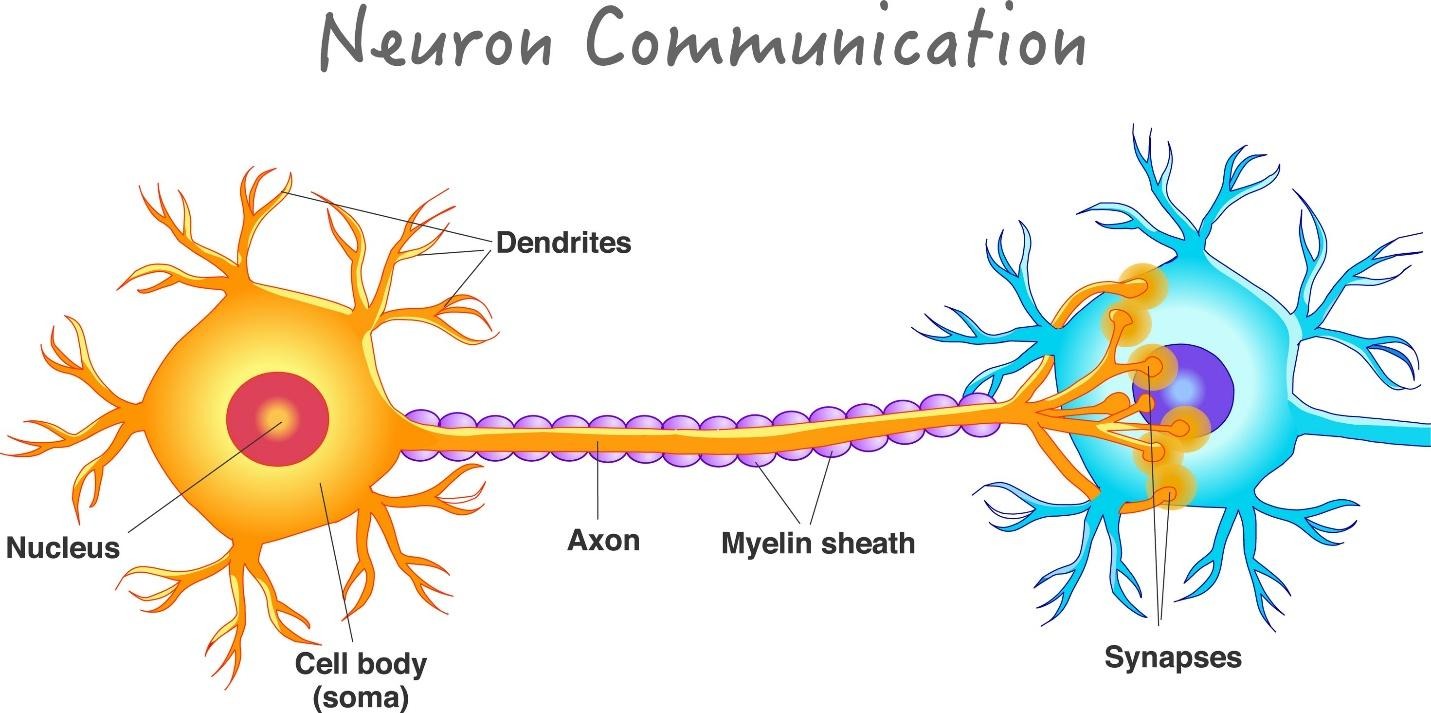
The earliest years of a child's life define their future. At Masterminds Academy, we recognize that the foundation for emotional stability, intellectual ability, and social confidence is laid in these first few years. This isn't a developmental stage to grow out of; it’s a blueprint for life. Early childhood is when the brain undergoes its most dramatic transformation. During this time, it is estimated that over a million neural connections form every second in an infant's brain. Every subsequent skill in the brain is built on these very early formations, including language, logic, empathy, and impulse control. At Masterminds Academy, our approach respects the science of brain development and integrates it into meaningful learning experiences designed for each child’s unique pace.
Brain development refers to the continuous process through which a child’s brain builds structure and function. It involves both physical growth and functional specialization. From conception to the early years, billions of neurons connect to form complex neural circuits. Brain development is shaped by two forces: genes and environment. Genes provide the blueprint. But experiences, positive or negative, determine how that blueprint is expressed. At Masterminds Academy, we align our curriculum with the natural sequence of neurodevelopmental growth. Each activity is meticulously crafted to support and challenge the child’s evolving cognitive, emotional, and physical domains.
The early years are not just the beginning of life; they are the most influential. Between birth and age six, the brain forms the architecture for all future learning, behavior, and mental health. This period is scientifically referred to as a sensitive period, when the brain is uniquely responsive to stimulation and interaction. At Masterminds Academy, our early learning environments are meticulously engineered to nurture these emerging abilities. Our educators observe, document, and respond to each child’s cognitive rhythm, ensuring stimulation occurs during these optimal windows of critical periods.
Brain development follows a highly organized, sequential pattern. Each stage builds on the last, laying the groundwork for progressively complex abilities.
Brain development begins long before birth. During the prenatal stage, the neural tube forms, eventually becoming the brain and spinal cord. By the end of the first trimester, most major brain regions are in place, although not yet functional.
From birth to three, the brain experiences its most intense period of synaptogenesis. Trillions of synapses form, enabling rapid learning across motor, sensory, language, and emotional domains. Neuroplasticity is at its peak, allowing children to learn through interaction, imitation, and direct experience. Therefore, the Early Years program for infants and toddlers focuses on creating deeply responsive environments.

Between ages three and six, the brain shifts from rapid expansion to specialization. Synaptic pruning becomes dominant, refining neural connections to increase efficiency. The frontal lobe and prefrontal cortex become more active, supporting skills like working memory, impulse control, and problem-solving. Children begin to understand syntax, build vocabulary, and navigate multiple languages when exposed to them early. Simultaneously, social-emotional skills expand. At this stage, structured learning opportunities yield measurable cognitive gains. That’s why Masterminds Academy blends inquiry-based exploration with structured cognitive challenges. Our goal is not to accelerate learning, but to optimize and deepen it, honoring the pace of healthy brain development.
While genes provide the instructions, a child’s experiences determine how those instructions unfold.
Genes guide growth, but epigenetic mechanisms, influenced by stress, caregiving, and nutrition, determine how those genes are expressed.
Children’s environments activate neural circuits. Rich, multi-sensory experiences build strong synaptic connections, while deprivation can hinder cognitive functions. At Masterminds Academy, each of our classrooms is acoustically optimized and aesthetically curated and full of tactile experiences that promote synaptogenesis.
Consistent, nurturing relationships promote emotional safety and enhance prefrontal cortex development. At Masterminds Academy, relationships form the foundation of our learning model.
Key nutrients like DHA, iron, and choline support myelination and synapse formation. Regular movement boosts brain plasticity and coordination.
Quality sleep, especially REM cycles, aids memory formation. Chronic stress, however, can alter neural architecture, increasing emotional reactivity and impairing regulation.
Excessive or passive screen time can reduce critical human interaction. We, at Masterminds Academy, emphasize real-world play and communication to build resilient neural networks.
The brain is not a single organ with a uniform function. It is a complex system of neural networks, each responsible for specific cognitive, emotional, and motor functions. These networks develop in a layered manner, much like constructing a building. At Masterminds Academy, we design our learning environments to align with this developmental sequence.
In early childhood, the brain forms more synapses than needed, allowing for flexibility in learning. Synaptic pruning refines these connections, strengthening the pathways essential for learning, reasoning, and emotional regulation.
At Masterminds Academy, we provide meaningful, repeated experiences that activate and reinforce the neural circuits most important for cognitive and emotional development.
Myelination coats neurons with a fatty layer, speeding up neural communication and improving cognitive functions. White matter, made up of myelinated axons, enables integration across brain regions, supporting tasks like memory and problem-solving.
From physical play to sensory exploration, Masterminds Academy encourages activities that stimulate a child's cognitive development, ensuring their cognitive pathways are optimally supported.
The cortex, especially the prefrontal cortex that matures gradually, supports impulse control, memory, and goal-directed behavior. This development is heavily influenced by social interaction, problem-solving, and experiential learning.
At Masterminds Academy, we foster cortical development by prioritizing child-led learning, peer collaboration, and real-world problem-solving, strengthening executive functions crucial for lifelong success.
Parents and caregivers influence development more than any curriculum. Everyday routines, when emotionally responsive and language-rich, stimulate robust neural connections. We equip families with tools to:
By collaborating with families, Masterminds Academy extends the classroom into the home.
Children progress rapidly across emotional, social, and cognitive domains. By age three, many demonstrate early executive functioning; by five, they show advanced reasoning and emotional insight. We support:
Masterminds Academy includes purposeful movement and sensory-rich activities in the Early Years program, knowing their profound effect on brain development.
Not all children follow the same trajectory. Differences in brain development, such as autism spectrum disorder (ASD) or attention-deficit traits, reflect variation, not deficit. Our inclusive approach supports:
At Masterminds Academy, we view neuroplasticity as an invitation, not a limitation. By designing for neurodiversity, we build classrooms that are both equitable and neurologically sound.

At Masterminds Academy, we apply cutting-edge research on brain development to create environments that nurture cognitive, emotional, and physical growth. Our approach aligns with the natural progression of neurodevelopment, focusing on synaptogenesis, synaptic pruning, myelination, and cortical specialization.
Children engage in multi-sensory play in our school that activates neural circuits, supporting language, memory, and motor skills development.
Masterminds Academy emphasizes the importance of secure, nurturing relationships with caregivers. These connections foster emotional regulation and stress management.
Structured learning and problem-solving tasks at Masterminds Academy strengthen executive functions, such as memory, attention, and impulse control.
Masterminds Academy integrates healthy nutrition and physical activity into daily routines, which boosts cognitive function and coordination.
Creating a safe, emotionally secure environment, we tend to promote healthy stress-response systems, essential for optimal brain development.
We provide tailored learning pathways and early interventions to address developmental challenges and maximize every child’s potential.
The early years are more than a beginning. They are the most powerful opportunity we have to shape the brain’s architecture for all future learning, behavior, and health. At Masterminds Academy, we do not take this responsibility lightly.
We recognize the complexity of the healthy developing brain and honor it with precision, care, and research-aligned practice. From fostering emotional resilience to building executive function, from cultivating language to strengthening neural networks through play, our work is both deeply human and scientifically informed. Masterminds Academy is where early education becomes future readiness, and it begins in the brain.
.svg)
.svg)
.svg)
.svg)
.svg)
.svg)
.svg)