.svg)
.webp)
Thank you for reaching out to us!
Your message has been received. Our team will get in touch with you shortly. In the meantime, you can visit Tuition Fees & Program Overview
Oops! Something went wrong while submitting the form.
Book A Tour


.svg)
Play-based learning is a research-supported approach in early childhood education that integrates purposeful play with educational objectives. This method nurtures cognitive, emotional, physical, and social development, while engaging children’s natural curiosity and intrinsic motivation to learn.
Play provides a dynamic learning environment, allowing children to construct knowledge through exploration, experimentation, and interaction actively. Rather than passive instruction, play-based learning positions children as active participants in their own development.
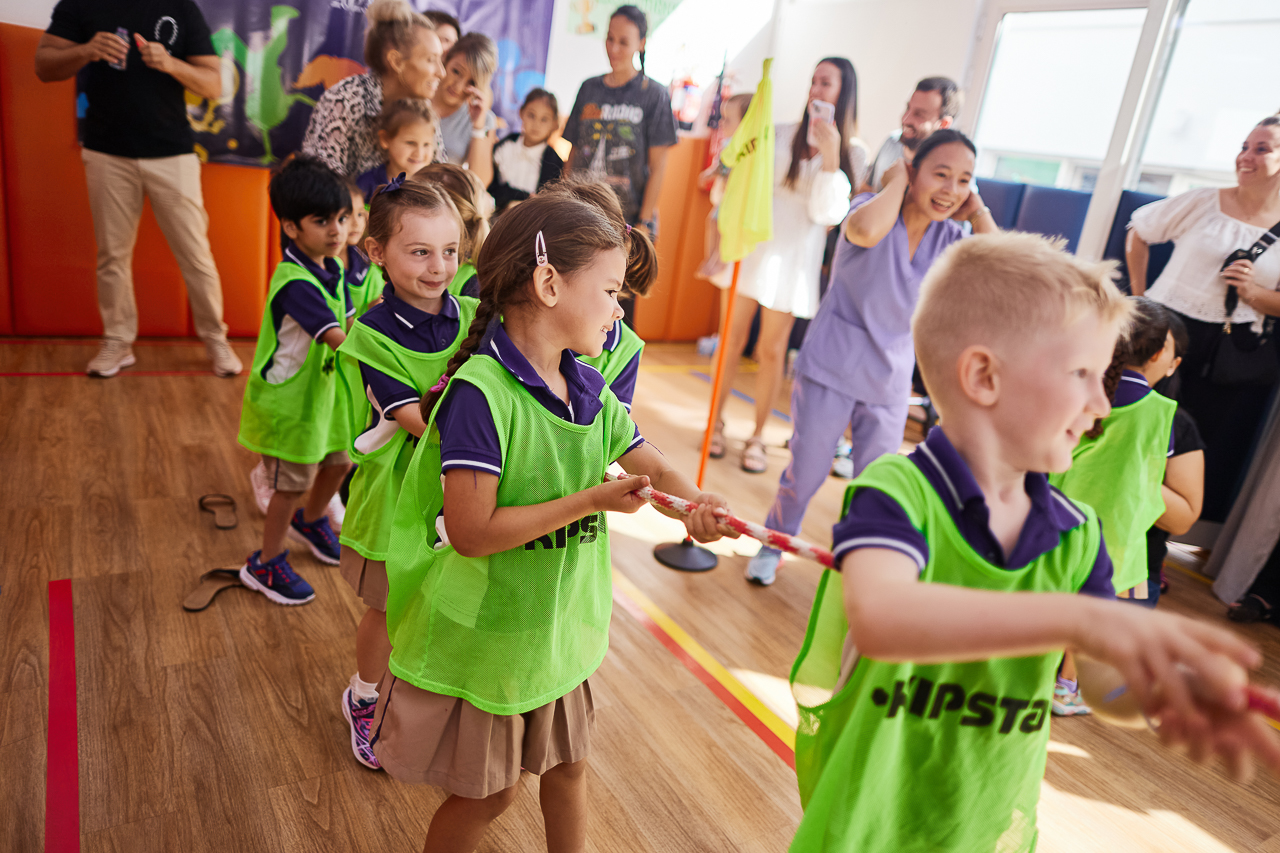
Play-based learning involves activities that encourage children to explore, experiment, and learn through play. It is a child-centered approach that aligns learning experiences with how young brains naturally develop. This way, children strengthen cognitive, emotional, and social skills in an engaging and meaningful environment.
This approach promotes creativity, curiosity, and critical thinking, cultivating an environment where learning feels purposeful rather than pressured. Children remain deeply engaged because play allows them to connect new ideas to their interests and experiences.
Play-based learning helps children build a strong foundation for future learning. It is critical for developing problem-solving skills, social-emotional competencies, language development, and executive functioning.
It facilitates deeper cognitive engagement, strengthens memory, attention, and adaptability, and prepares children for both academic learning and real-life challenges.
Research indicates that children engaged in play-based activities develop stronger cognitive abilities and higher levels of critical thinking. Play supports brain development by strengthening neural pathways associated with memory, attention, and flexible thinking.
Other benefits, such as social-emotional development and the development of essential motor skills, are of utmost importance as well. They learn to navigate challenges, think creatively, and work collaboratively, all of which are essential for long-term academic and personal success.
Play shapes how young children learn and process information. It enhances cognitive skills like memory, attention, reasoning, and problem-solving. Through activities such as pretend play, block play, and constructive play, children experiment with different strategies, improving their ability to think critically and solve problems.
This playful approach supports early language development, encourages flexible thinking, and promotes creativity, laying a strong foundation for future academic learning.
The benefits of play-based learning extend beyond the cognitive domain. It plays a critical role in developing empathy, cooperation, emotional regulation, and self-confidence. Through collaborative play, children practice negotiation, turn-taking, and communication.
Independent play fosters autonomy and resilience, helping children build confidence in their abilities while learning to manage emotions and social situations effectively.
Play isn’t just about cognitive or social development. It is also essential for physical development. Through active play, children strengthen both fine and gross motor skills, supporting coordination, balance, and spatial awareness.
Activities such as climbing, drawing, building, and movement-based play enhance hand-eye coordination and muscle control. These physical experiences are closely linked to cognitive development, attention, and emotional regulation.
Play-based learning can take many forms, each contributing uniquely to a child’s overall development.
Unstructured, or free play, allows children to lead their own learning experiences. Without predetermined outcomes, children explore materials, environments, and ideas independently, strengthening creativity, self-regulation, and intrinsic motivation.
Free play enhances problem-solving skills and adaptability, as children learn to make decisions, experiment, and reflect on outcomes.
In guided play, educators provide subtle guidance while allowing children the freedom to explore and discover. For example, introducing counting during block play supports numeracy while preserving the child’s autonomy and engagement.
Imaginative play, also known as dramatic play, allows children to act out different roles and real-world scenarios. This type of play supports language development, empathy, perspective-taking, and social reasoning.
By performing everyday situations, children practice communication, negotiation, and problem-solving, while also strengthening creativity and emotional understanding.
Block play is a classic example of constructive play, where children manipulate materials to build structures. It develops spatial reasoning, logical thinking, and fine motor control.
As children plan, build, and revise their creations, they practice perseverance, adaptability, and goal-oriented thinking, all of which are essential cognitive skills.
Sensory play engages the senses through materials such as sand, water, textures, and sounds. It supports motor development, emotional regulation, and sensory integration.
By safely exploring sensory experiences, children learn to process stimuli, express emotions, and regulate responses, contributing to both emotional well-being and physical development.
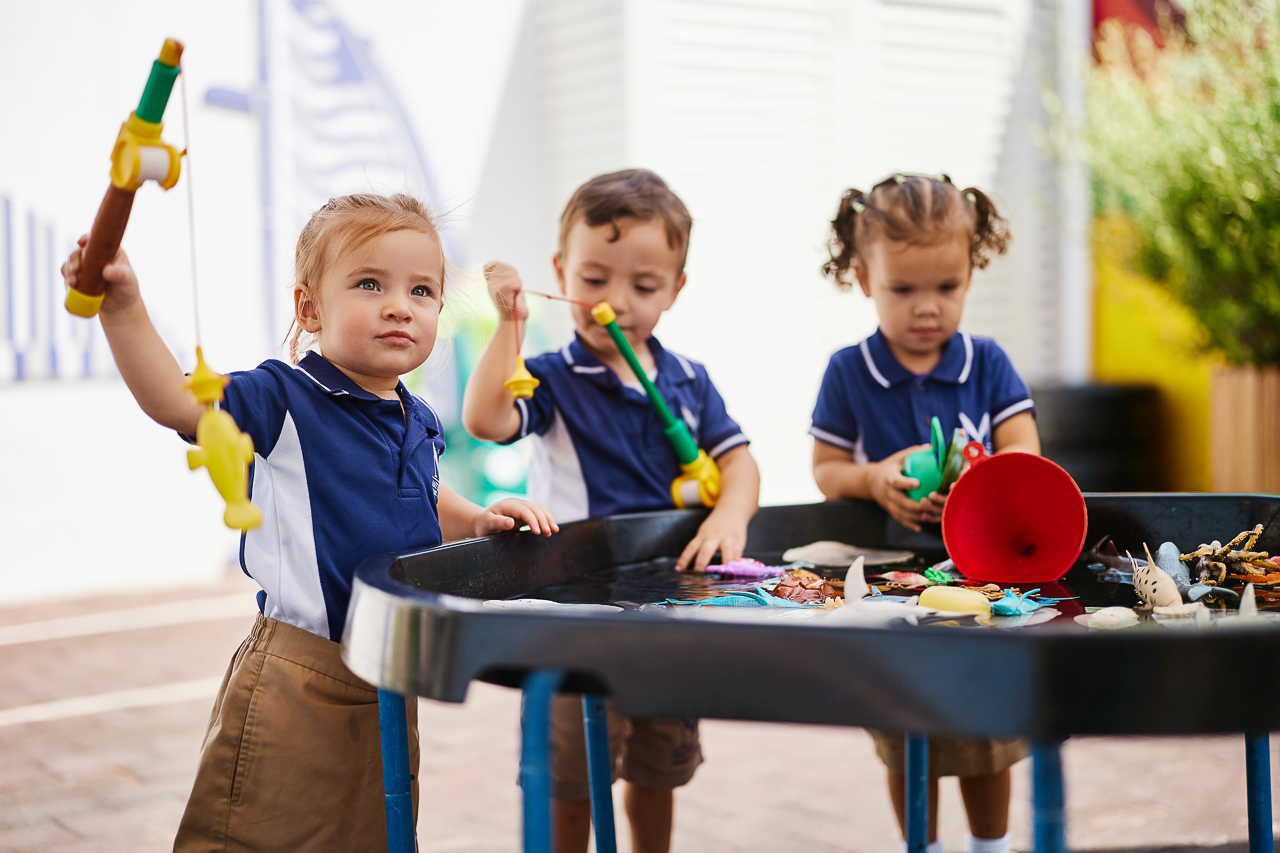
At Masterminds Academy, we believe play is not simply recreational; it is a powerful driver of cognitive, emotional, and physical development. Our play-based learning approach is grounded in neuroscience and designed to engage children’s natural curiosity while building essential skills for lifelong success.
We integrate cognitive, physical, and social-emotional growth into every aspect of play-based learning through our ATHENA Framework. Activities like singing, dancing, swimming, and gymnastics stimulate brain development, creativity, and emotional regulation, supporting balanced growth.
With class sizes of just 5-6 students, children receive individualized attention, allowing each child to engage meaningfully in activities that support their unique learning needs.
We emphasize experiential learning, where children actively learn by doing. Our hands-on, project-based activities enhance problem-solving, critical thinking, and collaboration, all while encouraging physical movement and self-expression.
At Masterminds Academy, we harness the power of play to nurture curious, confident, and well-rounded learners. Our approach prepares children for both academic success and lifelong emotional well-being.
Incorporating play-based learning into early childhood education is essential for nurturing young minds that are eager to explore. Play is not merely a recreational activity; it is a scientifically supported pathway to cognitive, social-emotional, and physical development. Through well-designed play-based activities, children gain critical skills that prepare them for future academic success and life challenges with confidence, creativity, and adaptability.
.svg)
.svg)
.svg)
.svg)
.svg)
.svg)
.svg)