.svg)
.webp)
Thank you for reaching out to us!
Your message has been received. Our team will get in touch with you shortly. In the meantime, you can visit Tuition Fees & Program Overview
Oops! Something went wrong while submitting the form.
Book A Tour


.svg)
Social-Emotional Learning (SEL) is a foundational component of children’s overall development, particularly during the elementary years when emotional, social, and cognitive skills rapidly evolve. In elementary schools, it focuses on helping children develop emotional intelligence and social competencies that support success both academically and personally.
This essential learning framework equips children with the tools to understand and manage emotions, build positive relationships, and make responsible decisions. These skills are critical not only for classroom learning but for lifelong well-being, resilience, and adaptability.
In the Bay Area, where educational expectations are high and families are deeply invested in long-term outcomes, SEL has gained significant recognition as a core element of high-quality education. Parents increasingly seek schools that intentionally nurture emotional development, recognizing its direct impact on academic engagement, behavior, and long-term mental health.
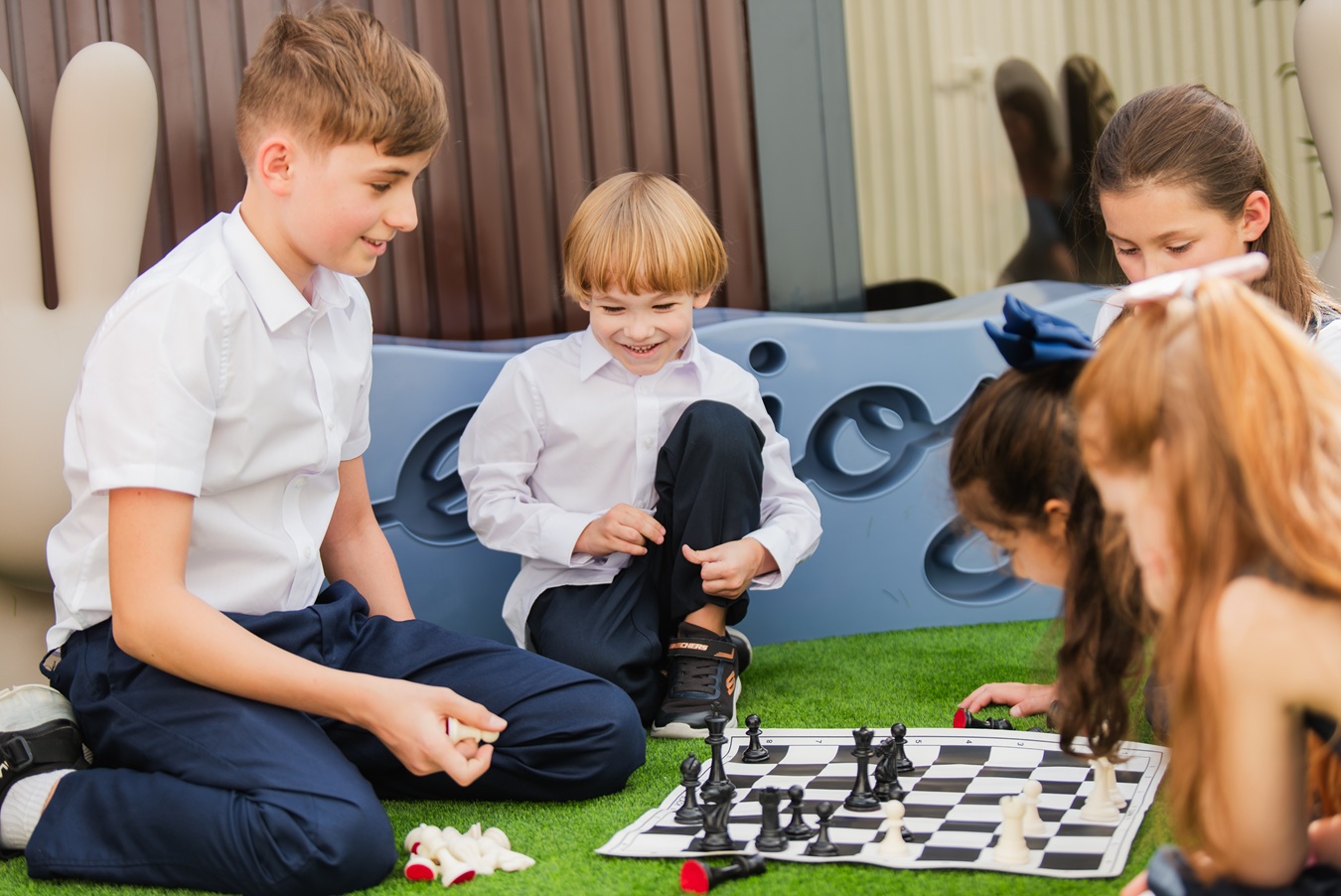
Social-Emotional Learning (SEL) refers to the process through which children and adults develop the necessary skills to manage emotions, set positive goals, show empathy for others, maintain positive relationships, and make responsible decisions. This process doesn’t just focus on cognitive development but also on emotional intelligence; skills that are vital for students to succeed in life, both inside and outside the classroom.
SEL is grounded in a framework that helps children thrive emotionally and socially. It includes developing competencies like self-awareness, self-management, and relationship skills that are crucial for building a positive school climate and fostering healthy identities. During the elementary years, SEL is especially important as these foundational years shape how children understand and regulate their emotions. Research has shown that early development of emotional intelligence supports academic success, positive peer relationships, and long-term mental health.
The five keys to successful SEL are as follows:
Self-awareness involves recognizing one's emotions, thoughts, and values, and how they influence behavior. It serves as the foundation for emotional intelligence and self-confidence. Children with high self-awareness are more in tune with their strengths and areas for growth, fostering a more confident and resilient attitude.
Self-management enables children to regulate emotions, thoughts, and behaviors across different situations. This competency supports focus, emotional control, and perseverance, allowing children to remain motivated and calm when facing academic or social challenges.
Social awareness is the ability to understand and empathize with others, including recognizing social and cultural norms. By learning to consider different perspectives, children develop empathy, respect, and inclusivity, contributing to healthier peer interactions and a more supportive school environment.
Strong relationship skills help children communicate clearly, cooperate with others, and resolve conflicts. These skills help children build trust, collaborate successfully, and form meaningful relationships with peers and adults alike.
Responsible decision-making involves making choices that reflect one's own and others' well-being. Children who master this competency can evaluate consequences, weigh alternatives, and act with integrity. These are skills that serve them well into adulthood.
The benefits of SEL extend beyond the classroom, impacting children’s academic learning, relationships, and mental health. Here's how:
Studies show that students who participate in SEL programs score higher in academic subjects. They are more engaged in school, exhibit better problem-solving abilities, and are less likely to exhibit disruptive behavior.
SEL programs promote skills like empathy, communication, and conflict resolution. These competencies support positive peer relationships and prepare children for effective collaboration and leadership later in life.
SEL contributes to lifelong mental health. Children who develop strong emotional competencies in early education are less likely to experience behavioral difficulties and more likely to demonstrate resilience as they grow.
When children practice SEL, families and communities benefit from stronger relationships and more effective communication. The ripple effect of SEL creates more supportive, empathetic environments that extend beyond the classroom.

At Masterminds Academy, SEL is seamlessly integrated into the curriculum, ensuring that every student develops the emotional and social skills needed for success. Here’s how we make it a core part of our educational approach:
We do not isolate SEL into a single lesson. SEL is embedded throughout academic learning and daily interactions, encouraging students to practice empathy, emotional regulation, and responsible decision-making across all subjects.
Our project-based learning approach naturally reinforces SEL competencies. Students collaborate, communicate, and resolve challenges together, strengthening relationship skills and self-management through real-world applications.
Mindfulness techniques are incorporated into daily routines, including academic instruction, music practice, language learning, and physical activities such as gymnastics, swimming, and ball skills. These practices support self-awareness, emotional regulation, and sustained focus. Simple exercises like guided breathing and reflection help students manage emotions effectively.
At Masterminds Academy, we emphasize the importance of building trusting relationships. Our teachers model positive communication, empathy, and collaboration, providing students with consistent examples of healthy social interaction.
We believe that SEL is most effective when families are involved. Through workshops and regular communication, we empower parents to reinforce SEL concepts at home, creating a consistent and supportive learning environment beyond the classroom.
In our Elementary program, students learn academics, creative expression, and real-world skills in a small group setting of 5–6 students. We regularly assess students' SEL progress, making sure that each child is supported by their teacher and receives the support they need to grow emotionally. These assessments help tailor our approach and ensure that SEL continues to be a key part of the student experience.
Social-Emotional Learning (SEL) is integral to the success of elementary students. It enhances academic learning, fosters emotional development, and prepares children for lifelong success. By prioritizing SEL, families and schools equip children with the skills needed to navigate both academic challenges and real-world relationships with confidence and resilience.
Children who participate in SEL programs tend to have better focus, improved memory, and stronger problem-solving skills, leading to better academic performance. It also fosters a growth mindset, which helps children tackle challenges with resilience.
SEL is integrated into daily lessons, activities, and classroom routines, with a focus on emotional regulation, empathy, and relationship-building.
Parents reinforce SEL at home by modeling emotional skills and supporting school-based activities, creating a consistent approach to emotional development.
Yes. SEL approaches can be personalized to meet individual emotional and social needs, ensuring every child receives appropriate support.
SEL helps children build foundational skills such as self-awareness, empathy, and responsible decision-making. These competencies are strongly associated with long-term academic achievement, career readiness, and mental well-being.
.svg)
.svg)
.svg)
.svg)
.svg)
.svg)
.svg)